Long poems
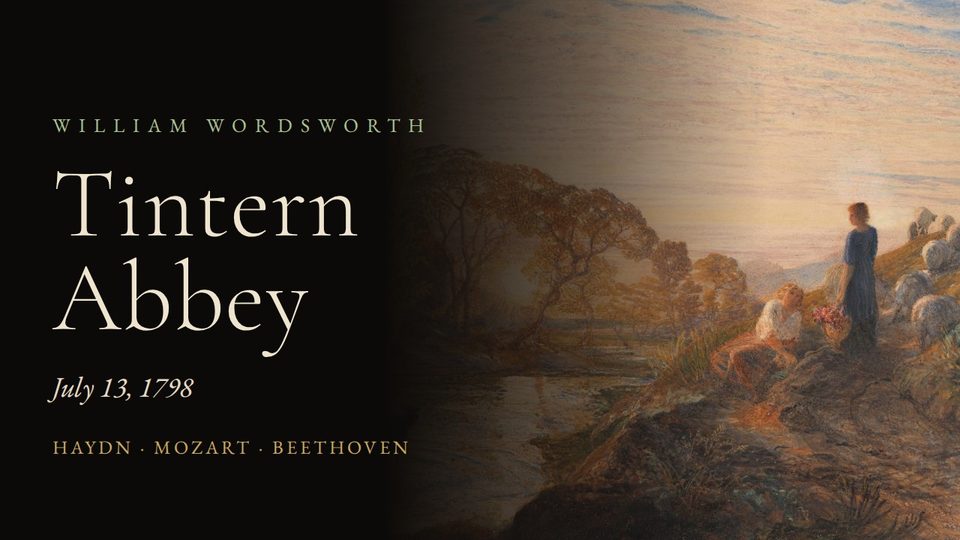
Tintern Abbey
'Lines written a few miles above Tintern Abbey', read in its first-edition text with the river Wye beneath it and chamber music written within a few years of the poem.
11:33Music: Haydn, Mozart, Beethoven, Welsh triple harp
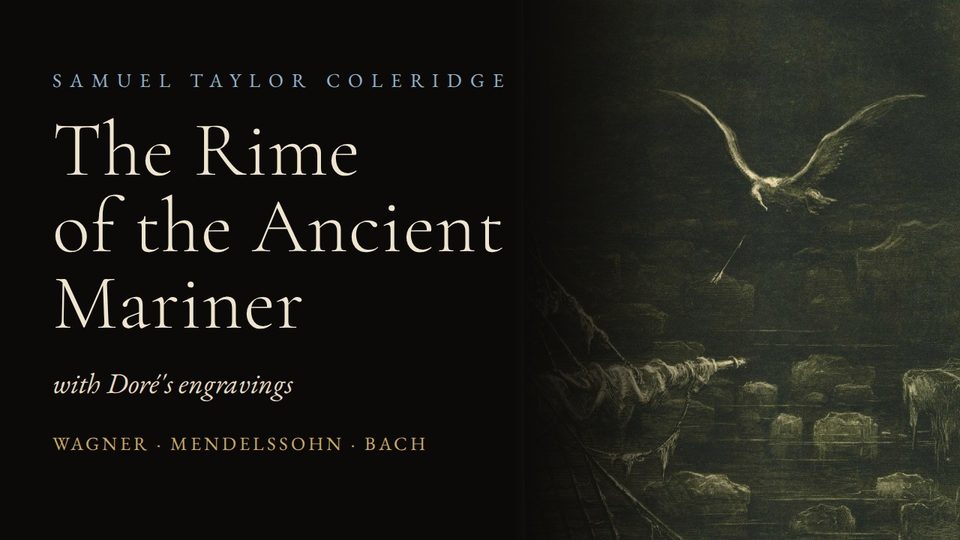
The Rime of the Ancient Mariner
The whole ballad in seven parts, in Coleridge's final text with his marginal gloss beside the verse, illustrated with Gustave Doré's engravings.
36:31Music: Mendelssohn, Mozart, Wagner, Debussy and more
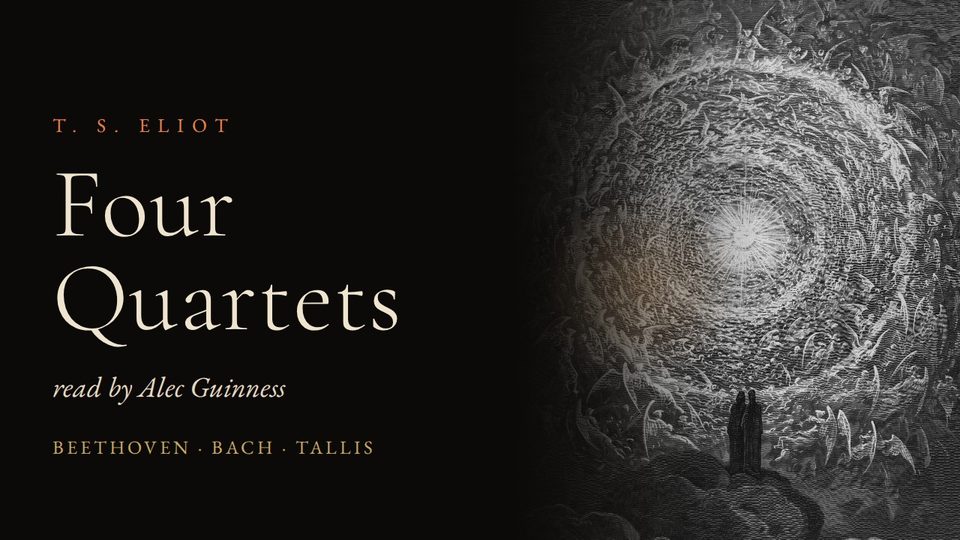
Four Quartets
Family edition · sign-in
Alec Guinness's 1971 reading, scored with Beethoven's late quartets, Bach and English church music. A family edition: the poem and the recording are still under copyright, so it opens only with an invited email.
58:45Music: Beethoven, Bach, Haydn, Byrd and more
Short poems
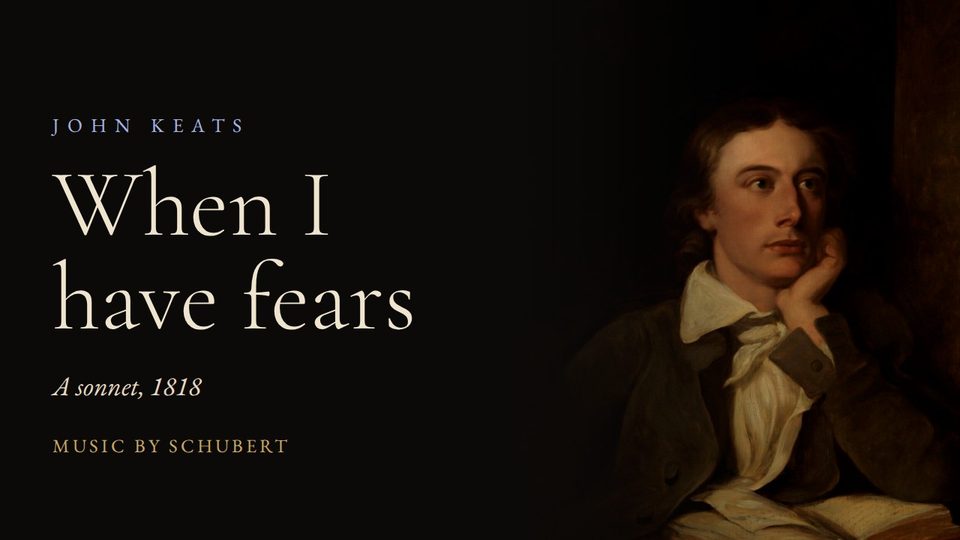
When I have fears
Keats, at twenty-two, imagines dying before he has written the books in him, before he has traced the romance he sees in the night sky, before he has loved. The sonnet turns in its last lines: standing alone on the shore of the world, he thinks until love and fame sink to nothing.
1:12Music: Schubert
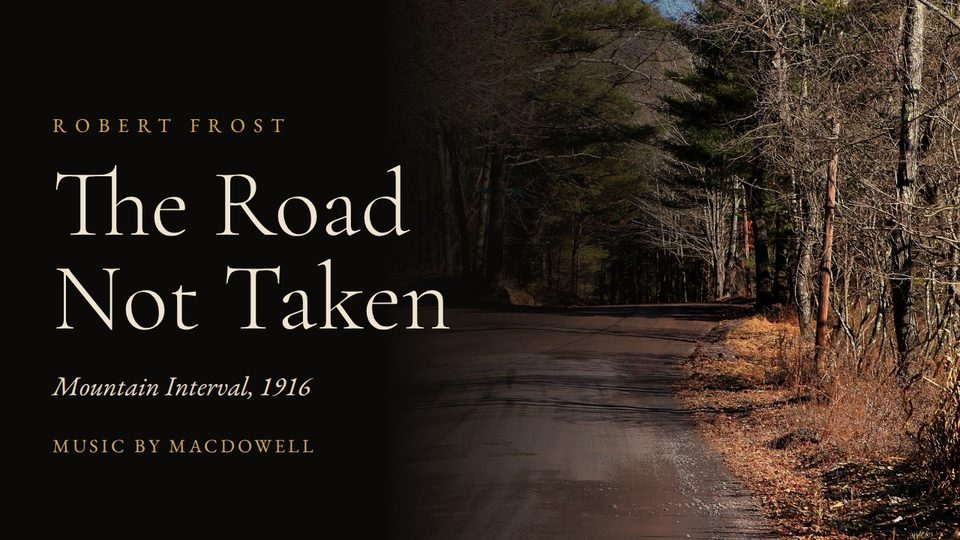
The Road Not Taken
A traveler stands where two roads part in an autumn wood, looks down one, and takes the other, though both are worn 'really about the same'. He imagines telling the story years later, with a sigh, as the choice that made all the difference. Frost wrote it partly as a gentle joke on his friend Edward Thomas, who always regretted the path he had not taken.
Public domain in the United States; not available in the UK and EU, where it is under copyright until 2034.
1:19Music: MacDowell
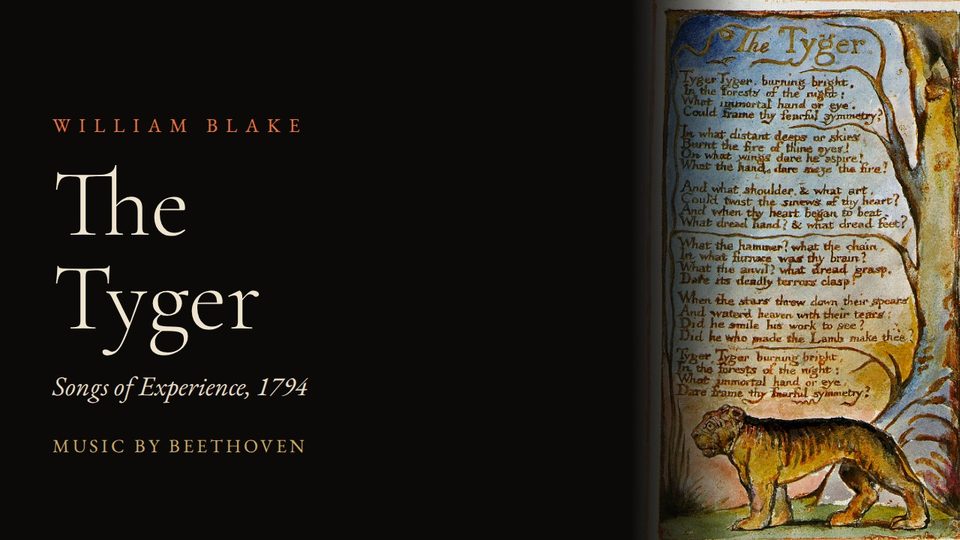
The Tyger
Six stanzas of questions to a tiger 'burning bright': what immortal hand or eye could make it, with what hammer, chain, furnace and anvil, and whether the maker who made the Lamb could make this too. The last stanza repeats the first, with one word changed: 'Could' becomes 'Dare'.
1:42Music: Beethoven
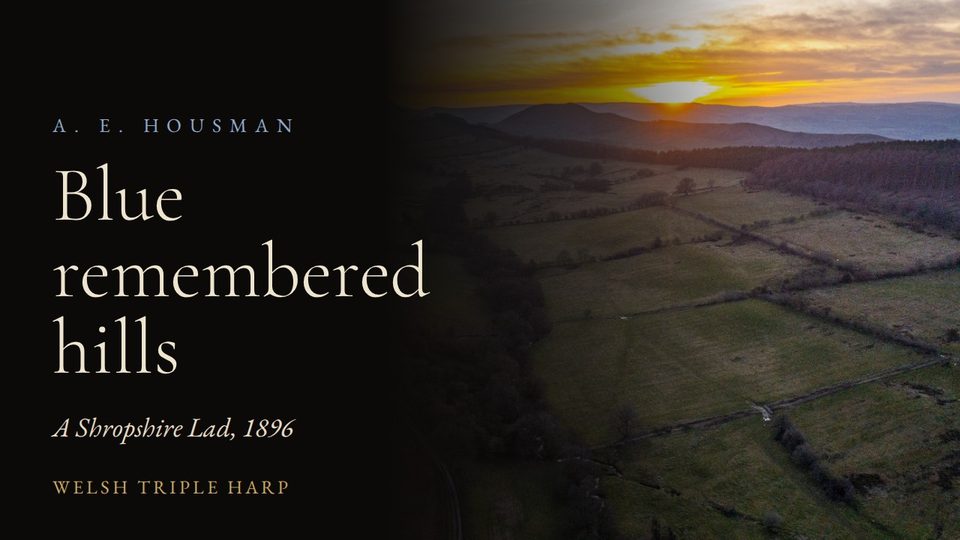
Into my heart an air that kills
Eight lines on homesickness for a place that cannot be returned to: the 'blue remembered hills' of a country seen from far off, 'the land of lost content', and 'the happy highways where I went / And cannot come again'. Housman, a Latin scholar in London, wrote of a Shropshire he barely knew.
1:17Music: Welsh triple harp
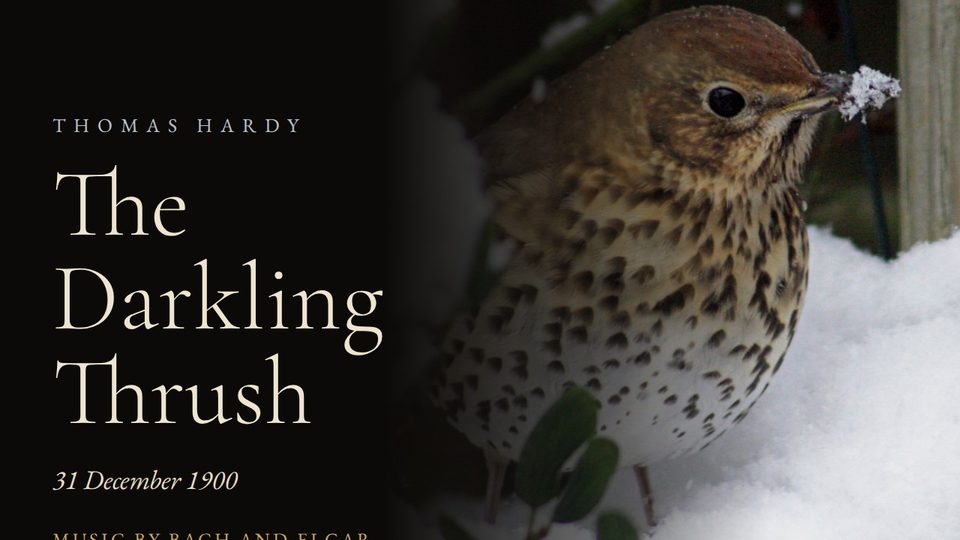
The Darkling Thrush
At a coppice gate on the century's last evening, the frozen land looks like the nineteenth century's corpse and every spirit seems as fervourless as the speaker. Then an aged, frail thrush bursts into joyful song. With so little cause for it, Hardy can only think the bird knew of 'some blessed Hope' of which he himself was unaware.
1:52Music: Bach, Elgar
The Creation
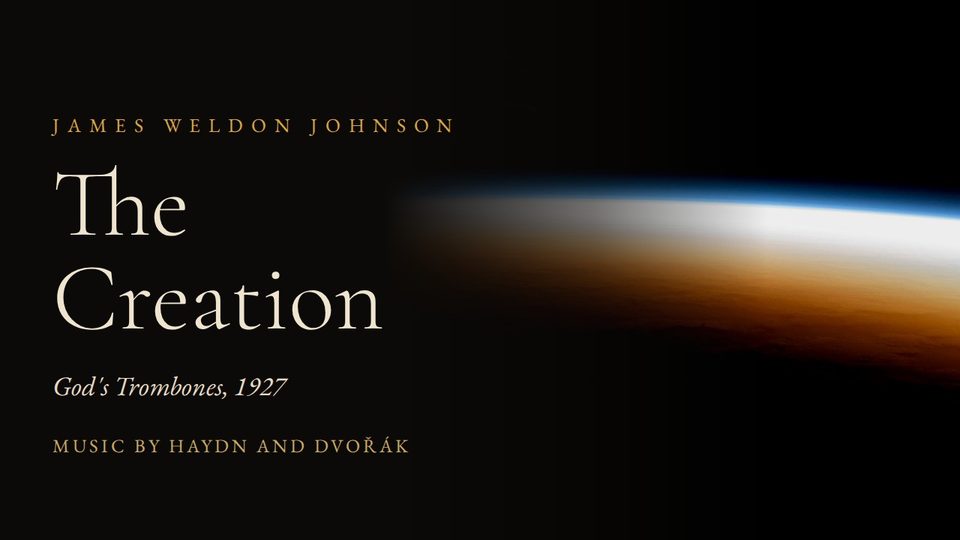
An old-time preacher tells Genesis to his congregation. A lonely God steps out on space, makes light, sun, moon and stars, walks the valleys and mountains into being, spits out the seas and fills the earth with green things and living creatures. Still lonely, he sits by a river, kneels in the clay, and shapes a man 'like a mammy bending over her baby', then blows into him the breath of life.
4:53Music: Haydn, Dvořák, Coleridge-Taylor, Welsh triple harp
Sonnets 12 and 60
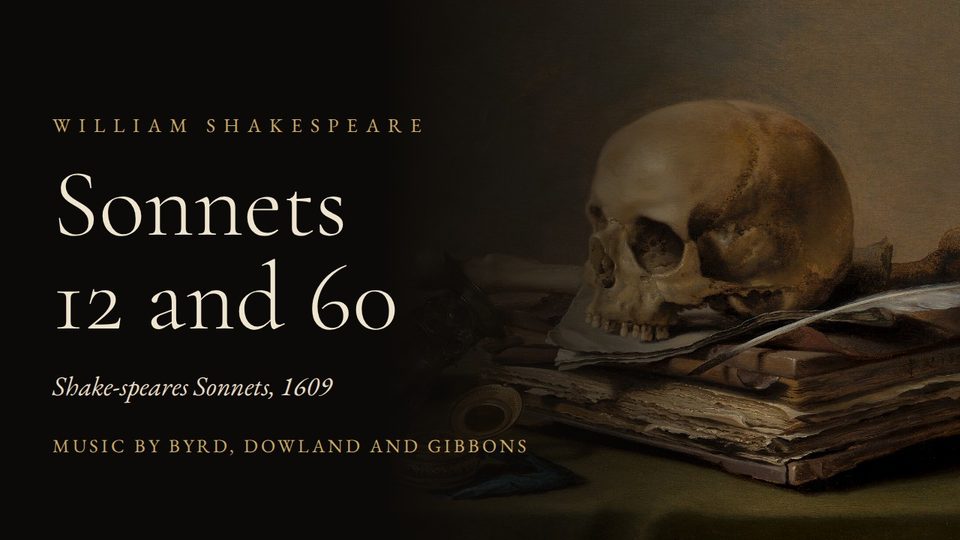
Two of Shakespeare's sonnets about time. In 12 the speaker counts the clock and watches everything fade, the day, the violet, dark hair, the trees, the harvest, and tells the young man that only children can defy Time's scythe. In 60 the minutes run to their end like waves toward a pebbled shore, Time digs lines in beauty's brow and mows everything down, yet the poet hopes his verse will stand against Time's cruel hand.
2:21Music: Byrd, Dowland, Gibbons
The New Colossus
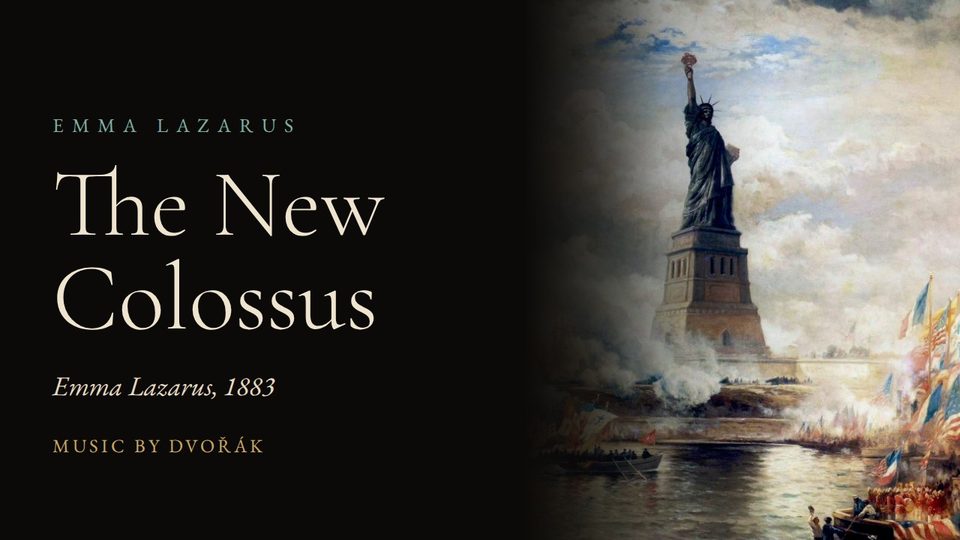
A sonnet about the Statue of Liberty, written in 1883 for an auction that raised money for its pedestal. It contrasts the bronze Colossus of Rhodes, a monument to conquest, with a 'mighty woman with a torch', the 'Mother of Exiles', who stands at New York's harbor and speaks without words: give me your tired, your poor, your huddled masses yearning to breathe free.
1:56Music: Dvořák
Get Drunk
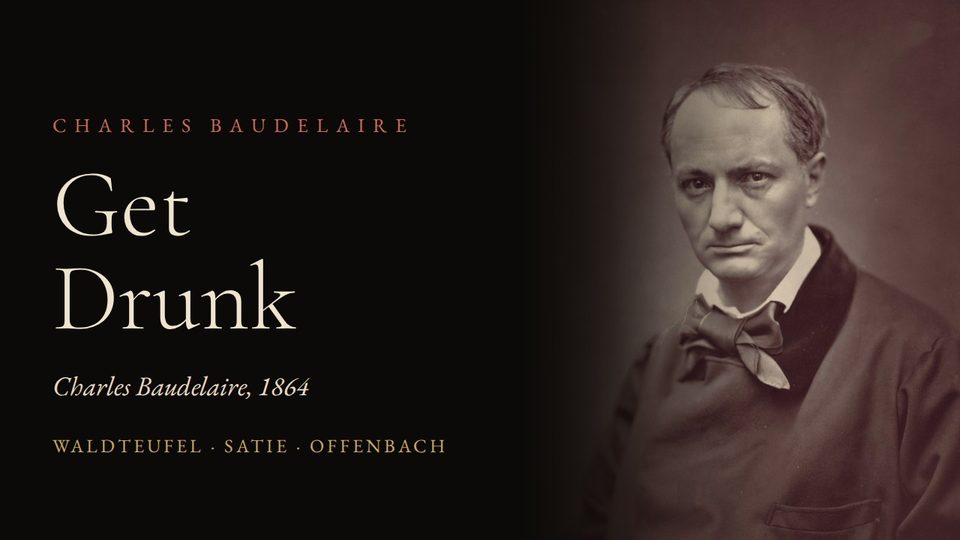
A short prose poem that tells you to stay drunk at all times, so as not to feel Time crushing your shoulders: drunk on wine, on poetry, or on virtue, as you please. And if you wake up sober, on a palace staircase or in a ditch or alone in your room, ask the wind, the wave, the star, the bird and the clock what time it is; they will all answer that it is time to get drunk. Read first in English, then in Baudelaire's French.
3:17Music: Waldteufel, Satie, Offenbach
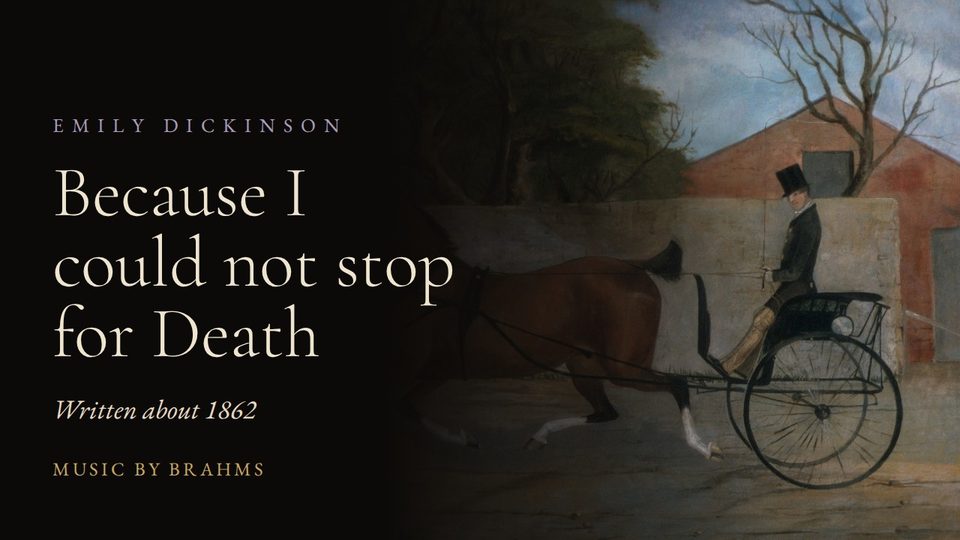
Because I could not stop for Death
Death calls for the speaker like a courteous gentleman in a carriage, with Immortality riding along. They drive slowly past a school at recess, fields of ripe grain and the setting sun, and pause at a 'house' that is only a swelling in the ground: her grave. Centuries have passed since, she says, yet they feel shorter than the day she first guessed where the horses were going.
1:25Music: Brahms
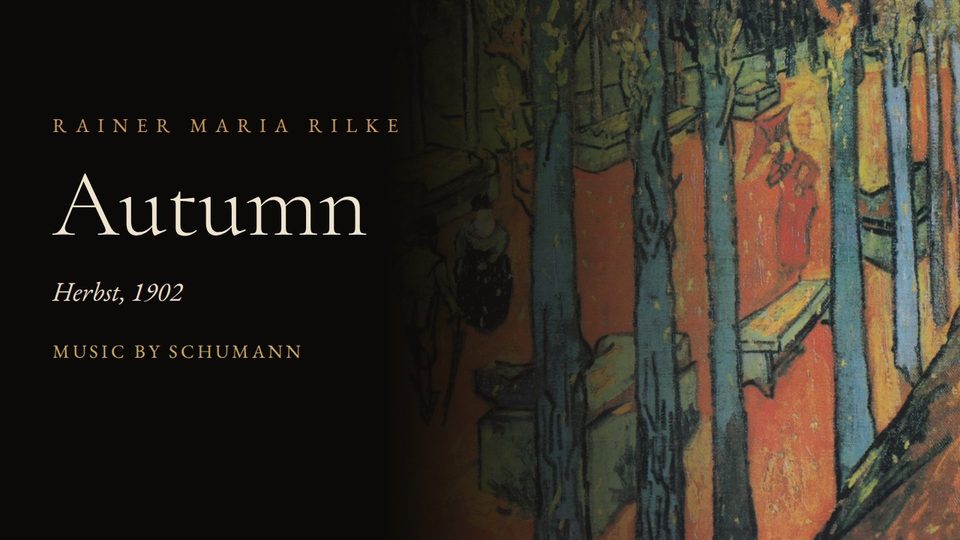
Autumn
Rilke wrote 'Herbst' in Paris in September 1902, in his first autumn there. Leaves fall as if from far away, as if gardens were withering in the heavens. At night the earth itself falls out of the stars into loneliness. We all fall; this hand falls; it is in everyone. And yet there is One who holds all this falling, infinitely gently, in his hands. Read first in a new English translation made for this edition, then in Rilke's German.
2:03Music: Schumann
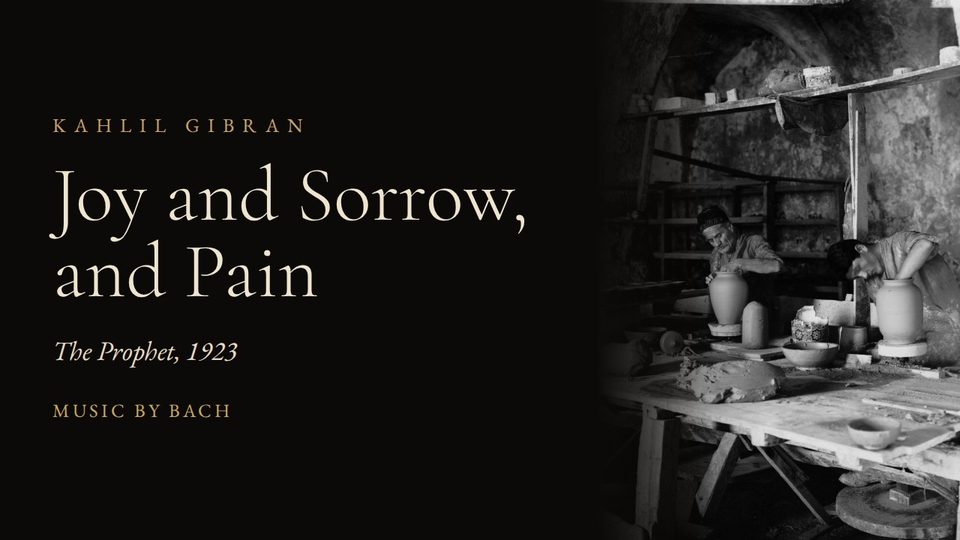
Joy and Sorrow, and Pain
Two chapters of The Prophet, in which the seer Almustafa answers the people of Orphalese before he sails home. Joy is sorrow unmasked: the cup that holds your wine was burned in the potter's oven, the lute that soothes you was hollowed with knives, and the deeper sorrow carves into you, the more joy you can hold. Pain is the breaking of the shell that encloses your understanding, a bitter potion from the physician within, in a cup the Potter moistened with His own tears.
3:41Music: Bach
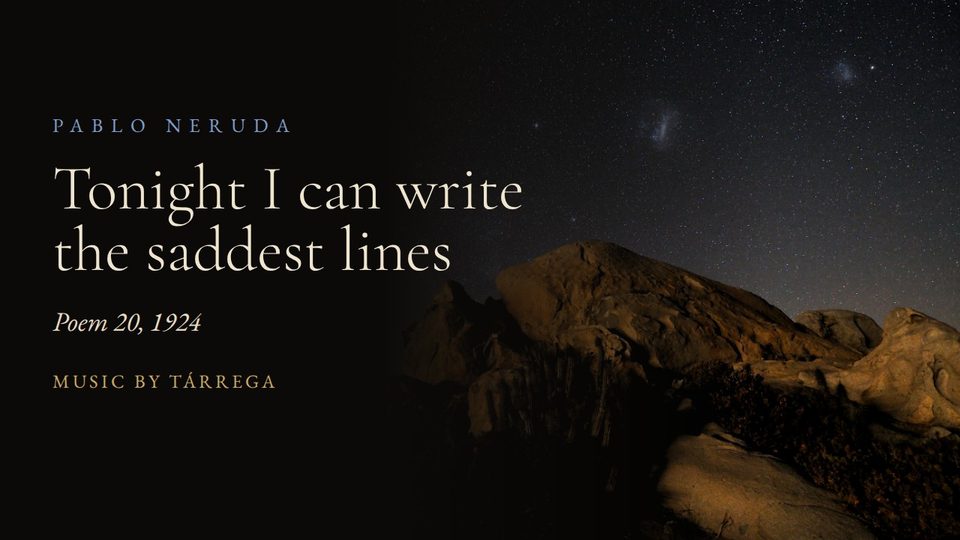
Poem 20
The most loved poem of Neruda's first great book, written when he was nineteen. On a starry night he says he can write the saddest lines: I loved her, and at times she loved me too. She is gone and will be another's. Love is so short, and forgetting is so long, and these will be the last lines he writes for her. Read first in a new English translation, then in his Spanish.
Public domain in the United States only; not available elsewhere, where it is under copyright until 2044.
4:51Music: Tárrega, Laucke
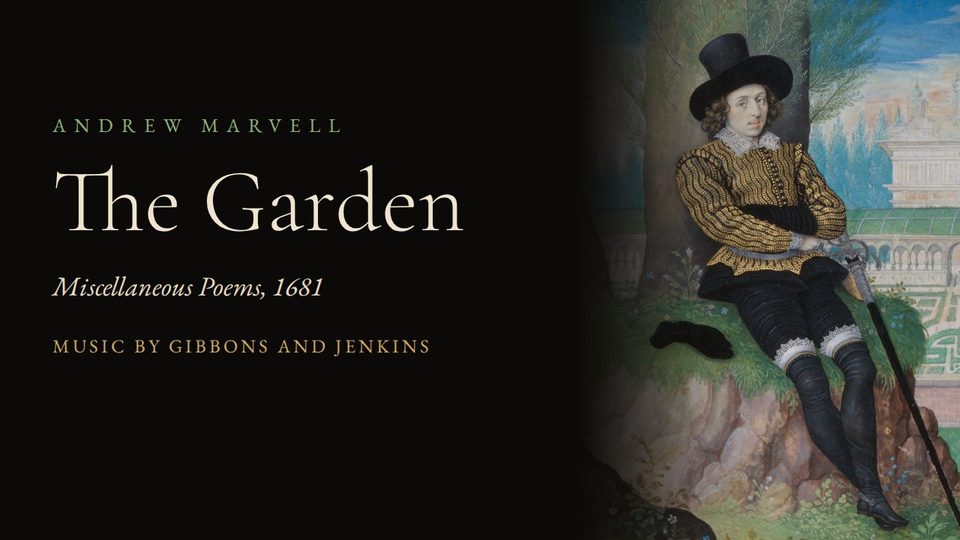
The Garden
Men wear themselves out to win a crown of palm, oak or laurel, when every flower and tree in a garden would weave them a garland of rest. The speaker has found Quiet and Innocence here, among plants, not in society. Green is lovelier than any mistress; even the gods chased nymphs only so that they would turn into trees. Fruit falls into his hands, his mind withdraws into 'a green thought in a green shade', and his soul perches in the branches like a bird. Eden was best before Eve, he jokes, and the garden's flower-dial keeps the sweetest time.
4:13Music: Gibbons, Jenkins
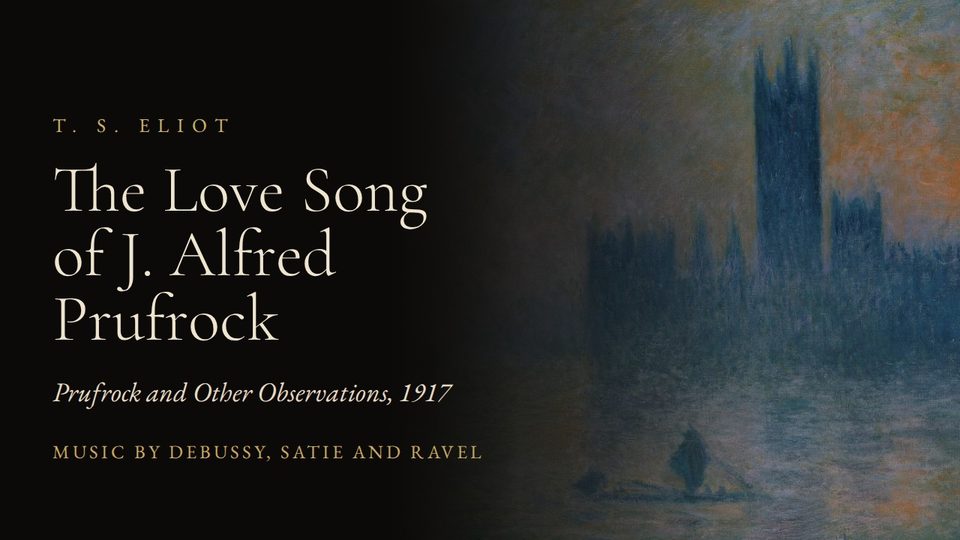
The Love Song of J. Alfred Prufrock
A timid, ageing man invites 'you' on an evening walk through foggy back streets to a drawing room where women talk of Michelangelo. He circles an 'overwhelming question' he never asks, telling himself there will be time, fearing the eyes that pin him like an insect, the bald spot, the Footman's snicker. He is not Hamlet, he decides, only an attendant lord, almost the Fool. At the end he walks on the beach in white flannel trousers and hears the mermaids singing, though not to him, until human voices wake us, and we drown.
Public domain in the United States only; not available elsewhere, where it is still under copyright (in the UK and EU until 2036).
9:21Music: Debussy, Czibulka, Satie, Elgar and more
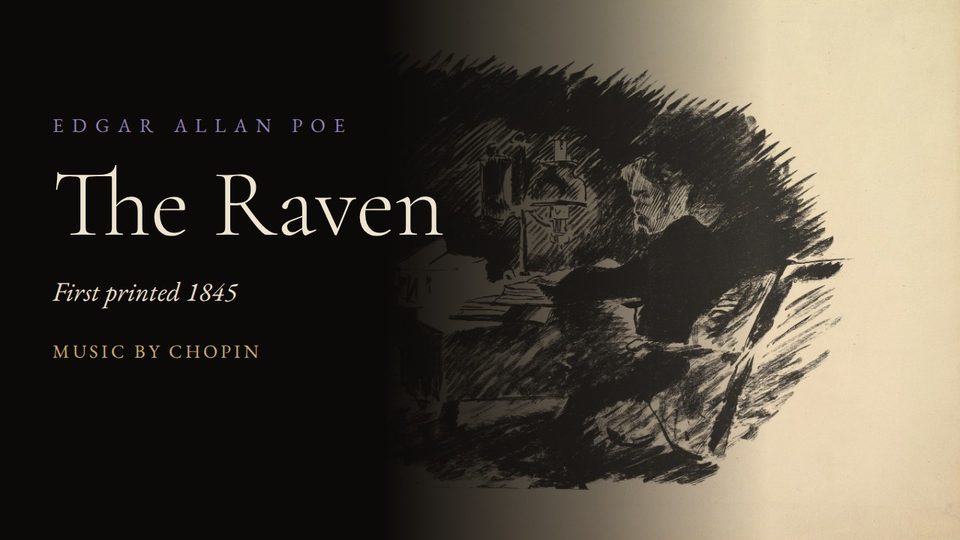
The Raven
Past midnight in a bleak December, a young scholar grieving for his dead love Lenore hears a tapping at his chamber door. He opens it to darkness, then opens his window, and a raven walks in and perches on a bust of Pallas Athena above the door. The bird knows only one word, 'Nevermore'. At first amused, the man begins to ask it questions it can only answer one way: will he forget Lenore, is there any comfort, will he hold her in heaven? Each 'Nevermore' drives him further into despair, until his soul lies trapped in the raven's shadow on the floor.
8:56Music: Chopin
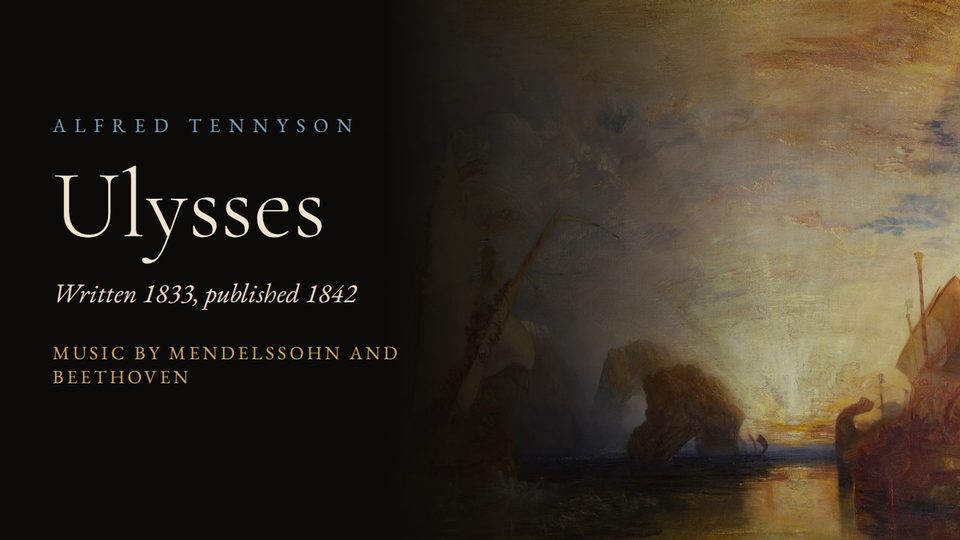
Ulysses
Old Ulysses, home at last on rocky Ithaca after the Trojan War and ten years of wandering, cannot bear to sit by the hearth and rule. He has lived greatly and become a name; experience only shows him more world beyond. He leaves the island to his careful son Telemachus and calls his old crew to sail once more, past the sunset, to seek a newer world. Tennyson wrote it weeks after his closest friend died; he said it gave his feeling 'about the need of going forward, and braving the struggle of life'.
5:56Music: Mendelssohn, Beethoven
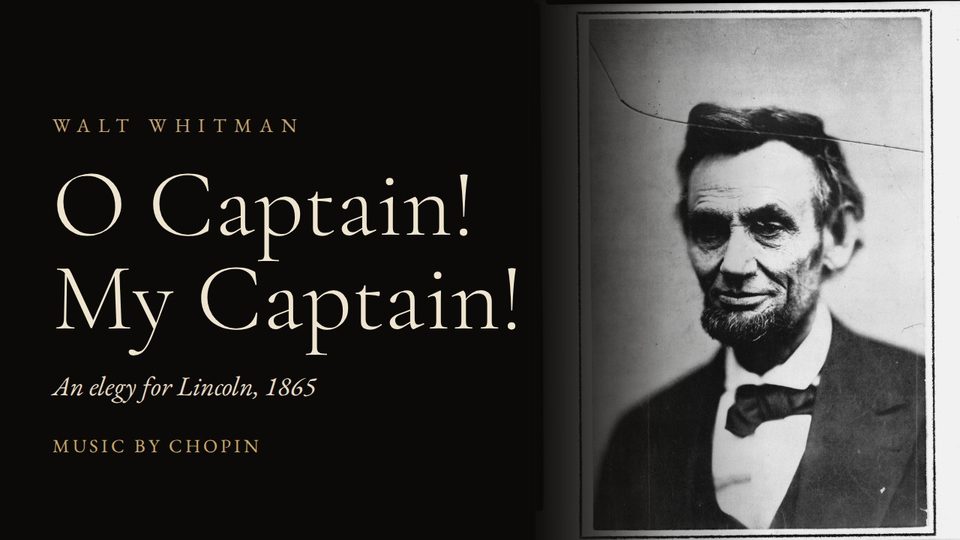
O Captain! My Captain!
Whitman's elegy for Abraham Lincoln, shot on 14 April 1865, five days after the Confederate surrender. A sailor speaks to his dead captain: the ship of state is home from its 'fearful trip', the Civil War, the prize is won and the shore is cheering, but the captain lies 'fallen cold and dead' on the deck. The crowds' joy and the speaker's grief pull against each other to the last line.
2:21Music: Chopin
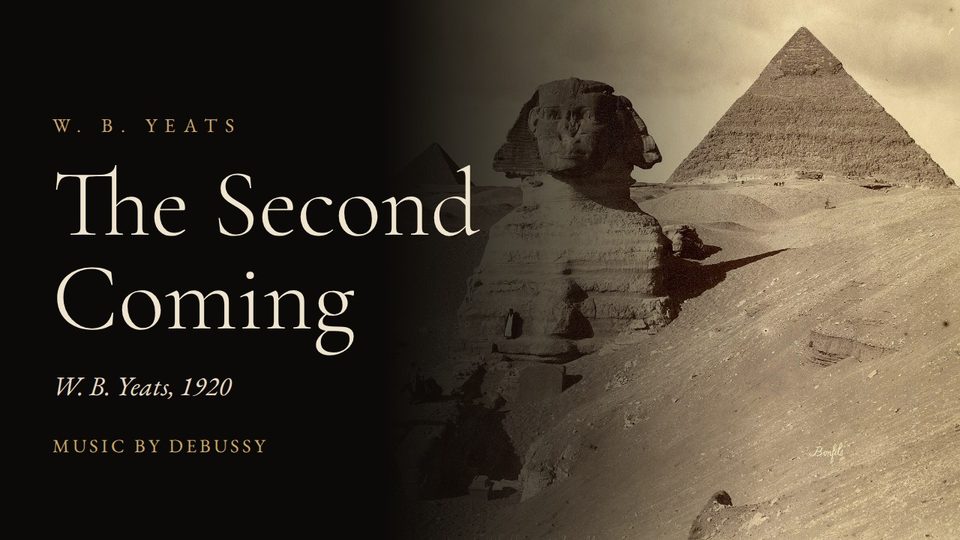
The Second Coming
Written in the winter after the First World War, with Russia in revolution and Ireland moving towards war. The world spins out of control like a falcon circling too wide to hear its master; anarchy and a 'blood-dimmed tide' are loosed. The speaker reaches for a Second Coming and is given instead a vision of a sphinx-like beast stirring in the desert after twenty centuries of sleep, a new age slouching towards Bethlehem to be born.
1:59Music: Holst
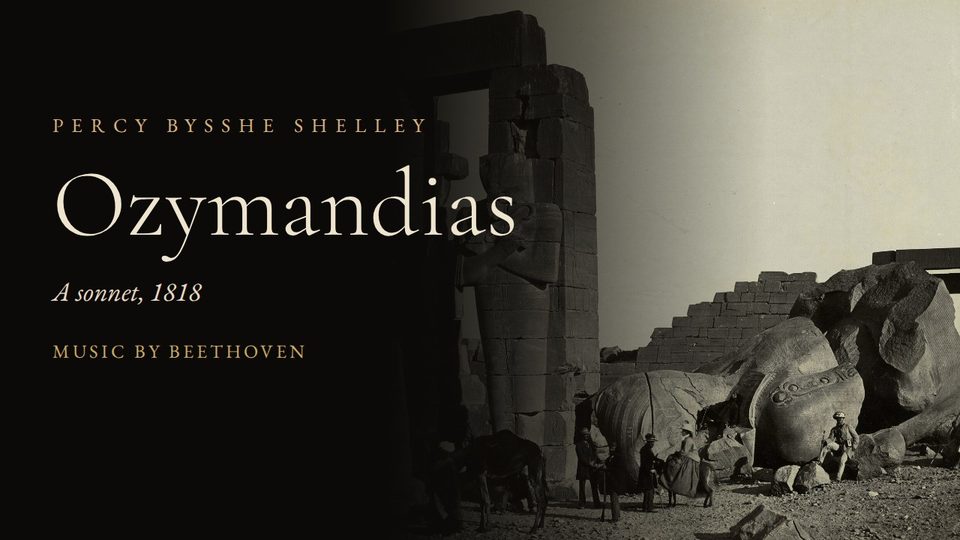
Ozymandias
A traveller describes a ruin in the desert: two huge stone legs, and beside them a broken face whose sneer the sculptor read and carved. On the pedestal the king, Ozymandias, boasts that the Mighty should look on his works and despair. Nothing else is left. Around the wreck, the sand runs flat and empty to the horizon.
1:32Music: Beethoven
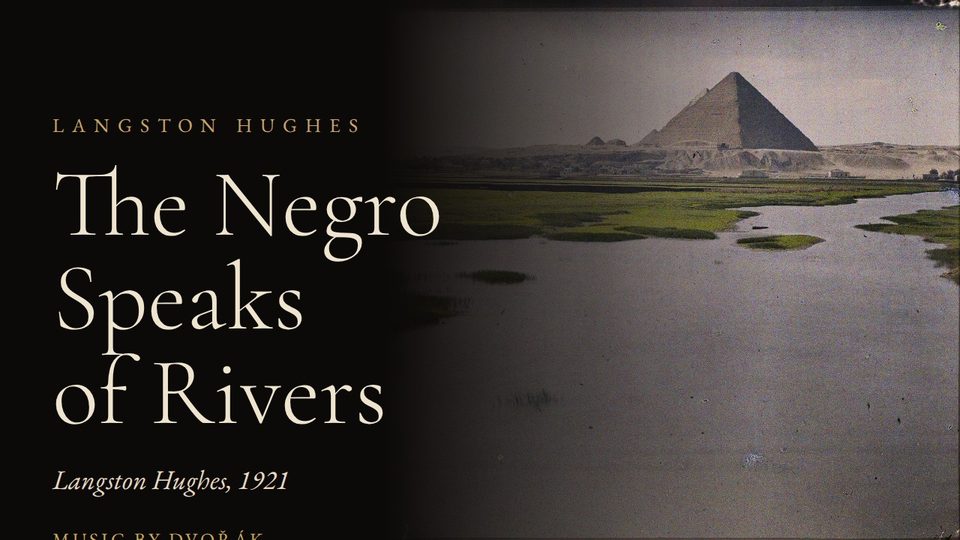
The Negro Speaks of Rivers
Hughes wrote this poem in the summer of 1920, as his train crossed the Mississippi near St. Louis, and it was the first of his poems printed in a national magazine. One voice speaks for a whole people's memory: it has known the oldest rivers, the Euphrates, the Congo and the Nile, and the Mississippi of slavery and freedom, and its soul has grown deep like them.
Public domain in the United States only; not available elsewhere, where it is still under copyright (in the UK and EU until 2038).
1:53Music: Dvořák, Welsh triple harp
How these are made
The readingEach poem uses its first published text, checked against page scans. The voices are designed for each poet with ElevenLabs, except Four Quartets, which is Alec Guinness's reading.
The scoreMusic written near the poem's own time, in free recordings: Haydn and Beethoven for Wordsworth, Schubert for Keats, a 1912 record for Frost. Real sound, such as a thrush or a forge, falls on its own words.
The pageThe text follows the voice word by word. Every note links to its source, and every picture and recording is credited with its license.